
Vital Signs Monitoring at Home (NEWS Score)
Vital Signs Monitoring at Home (NEWS Score)
Keeping a close eye on someone’s health at home can make the difference between catching a problem early and facing a crisis. CareLink Direct provides regular, nurse-supervised vital signs monitoring at home across Sussex and Surrey, giving families the reassurance that changes are spotted quickly and acted on safely.
Vital Signs Monitoring at Home (NEWS Score)
Vital signs are a set of measurements that give a picture of someone’s overall health. They typically include heart rate, blood pressure, respiratory rate, temperature and oxygen levels. Monitoring these regularly allows clinical staff to detect changes early, before a situation becomes serious.
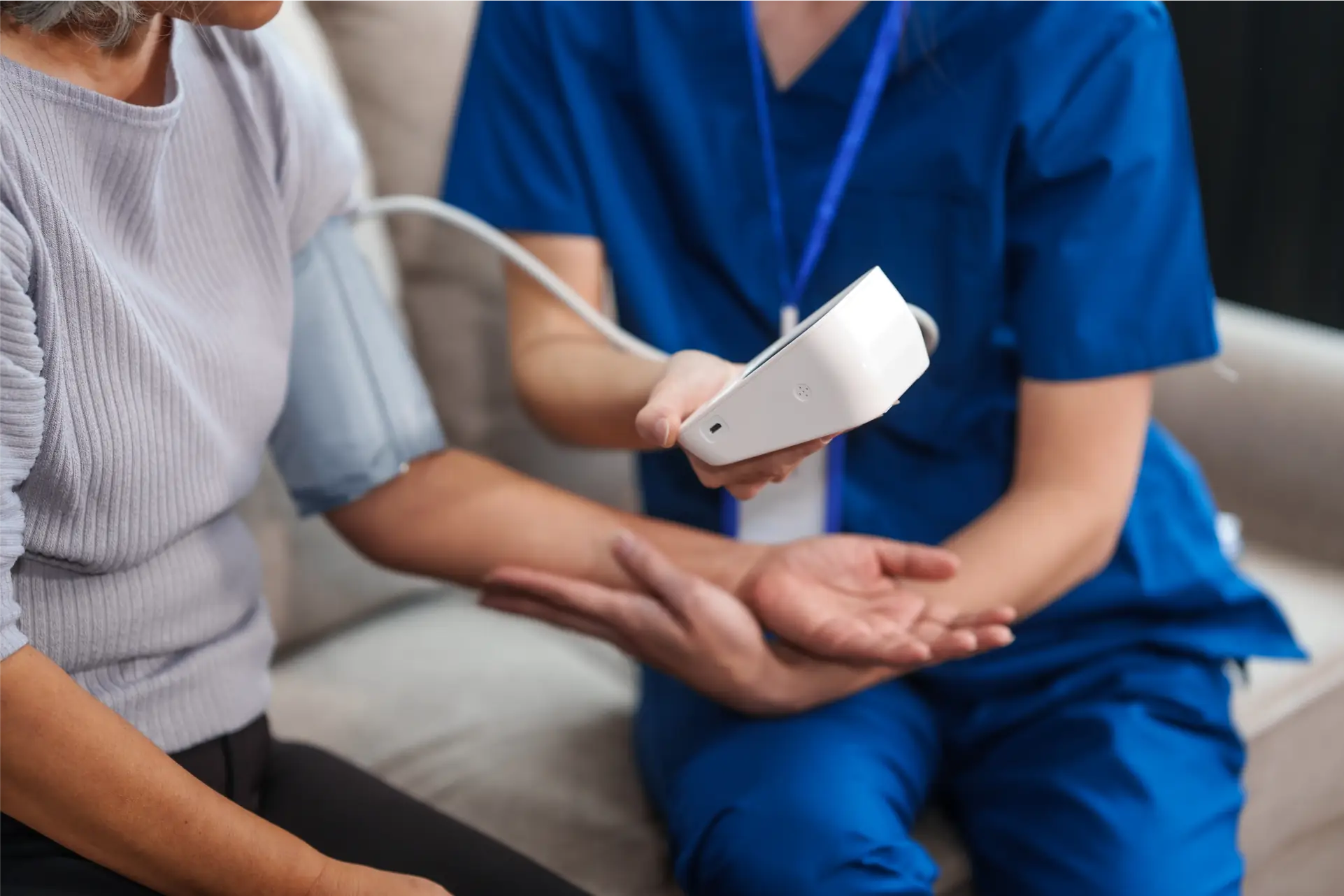
At CareLink Direct, we use the NEWS scoring system. NEWS stands for National Early Warning Score. It is a standardised tool used across the NHS to identify patients whose condition may be deteriorating, so that appropriate action can be taken at the right time.
Vital signs monitoring is particularly important for people with complex or long-term health conditions, those who have recently been discharged from hospital, or anyone in an unstable phase of illness where close observation is part of keeping them safe at home.
When is vital signs monitoring the right choice?
Families often consider vital signs monitoring when a loved one has been discharged from hospital and needs a period of close observation at home, or when a health condition means that early detection of changes is important for preventing hospital admission.
You might find vital signs monitoring helpful if your loved one:
– Has a heart condition, respiratory condition or other complex long-term illness
– Has recently been discharged from hospital and is in a period of recovery
– Has a condition that can deteriorate quickly if changes go unnoticed
– Is receiving other clinical care at home and needs monitoring as part of a wider package
– Would otherwise need to remain in hospital for observation
How vital signs monitoring supports families
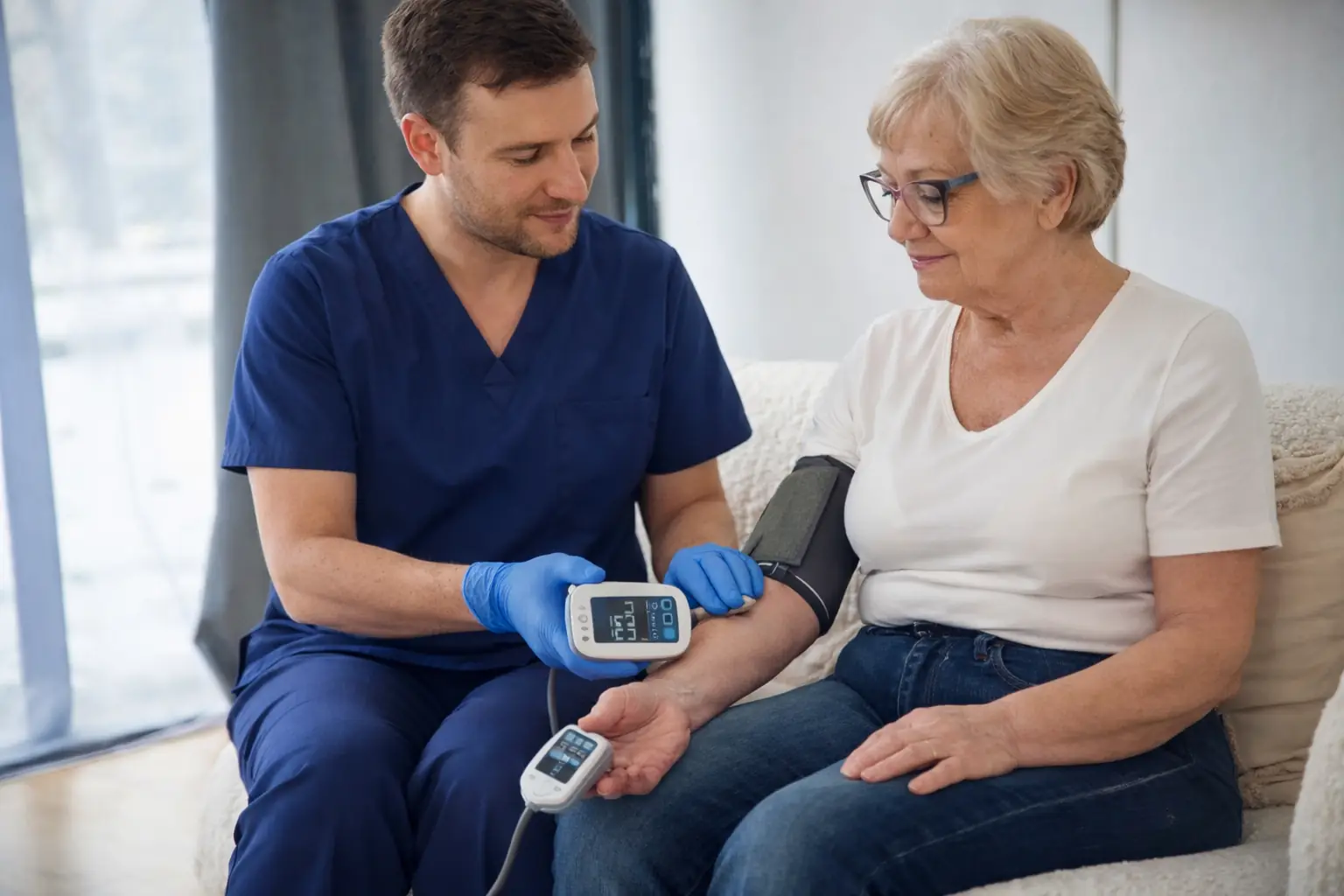
- Regular, structured observations carried out by trained carers under nurse supervision
- NEWS scoring used consistently to identify any changes that need attention
- Clear escalation pathways if a score indicates the need for clinical review
- Coordination with GPs and hospital teams when follow-up is needed
- Families kept informed of how their loved one is doing
- Documentation of every observation, creating a clear and consistent clinical record
- Reassurance that someone qualified is watching for changes, even between family visits
What vital signs monitoring involves
Our trained carers, supervised by our nurse team, carry out structured vital signs observations as part of your loved one’s care plan. This includes:
- Escalating to the clinical team or GP if readings indicate a change
- Recording heart rate and rhythm
- Measuring blood pressure
- Monitoring respiratory rate and breathing effort
- Taking temperature
- Recording oxygen saturation levels
- Calculating and documenting the NEWS score
Arranging vital signs monitoring at home
If you are concerned about a loved one’s health at home and want someone clinical to keep a close watch, we are here to help. Vital signs monitoring can form part of a wider care package or be arranged alongside existing support.
Registered for TDDI
“Registered to provide Treatment of Disease, Disorder or Injury (TDDI)”, meaning we are approved to deliver complex clinical care at home for people living with serious illness, disability, or injury.