
Enteral Feeding at Home (PEG and JEJ Feeding)
Enteral Feeding at Home (PEG and JEJ Feeding)
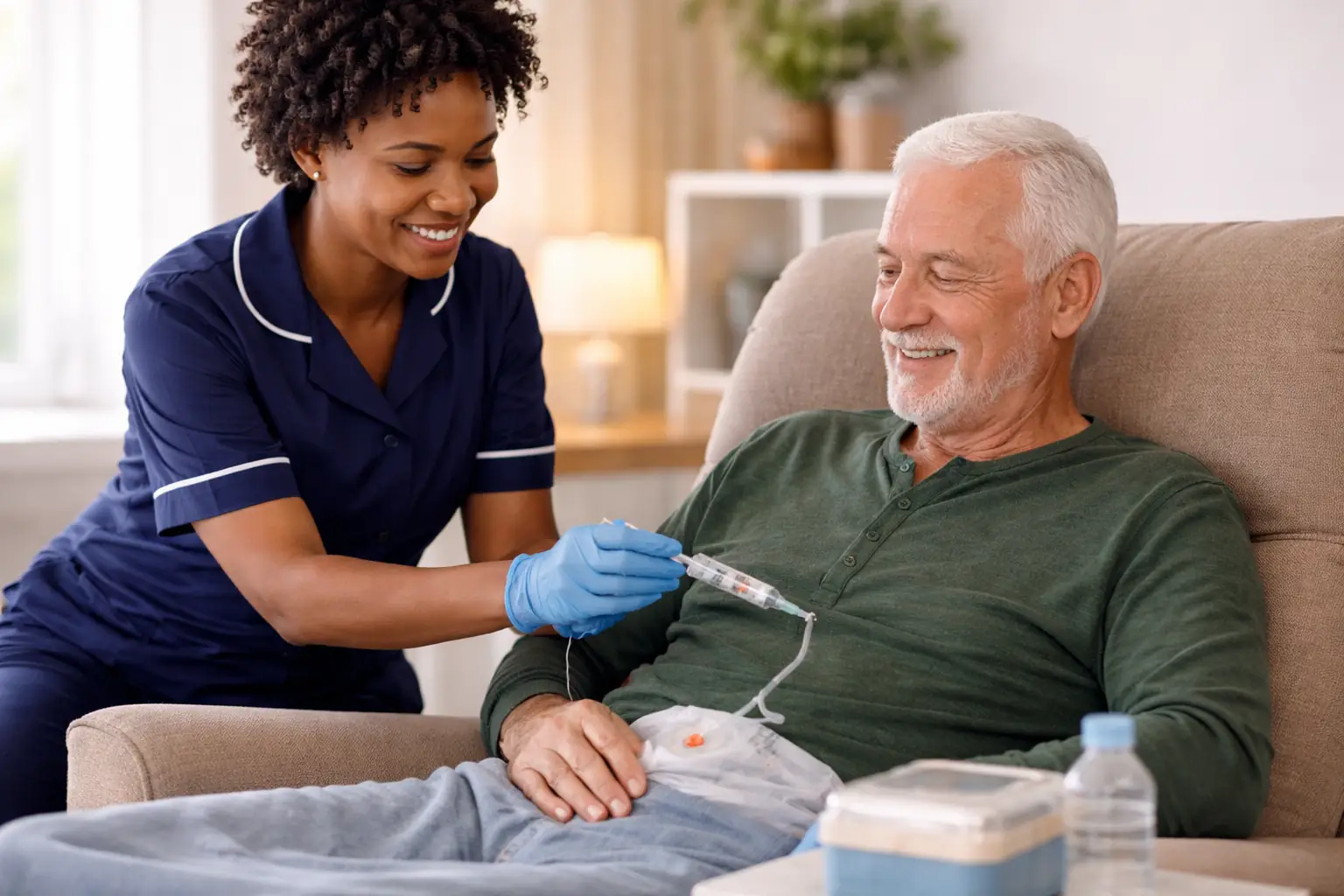
When someone cannot eat by mouth, nutrition still has to reach them safely. CareLink Direct provides nurse-supervised enteral feeding support at home across Sussex and Surrey, giving people with complex nutritional needs the expert care they need to stay safe and comfortable at home.
Enteral Feeding at Home (PEG and JEJ Feeding)
Enteral feeding is a way of delivering nutrition directly into the digestive system through a feeding tube, used when a person is unable to eat or swallow safely by mouth but has a functioning digestive system.

The two most common types of enteral feeding tube that CareLink Direct supports are PEG and JEJ. A PEG tube, which stands for Percutaneous Endoscopic Gastrostomy, is a tube inserted through the abdomen directly into the stomach. A JEJ tube, or jejunostomy tube, delivers nutrition further down the digestive tract, into the small intestine. Both require careful management, regular monitoring and specific clinical training to support safely.
Enteral feeding is commonly needed following a stroke, in cases of motor neurone disease or other neurological conditions, or after surgery or illness affecting swallowing. It can be a long-term arrangement or a temporary measure during recovery.
When is enteral feeding support needed at home?
The need for enteral feeding support at home often follows a hospital admission or a change in a person’s ability to eat safely. Families may find themselves leaving hospital with a feeding regime in place and limited guidance on how to manage it day to day.
You may be considering enteral feeding support at home if your loved one:
- Has a PEG or JEJ tube in place and requires ongoing support with feeds
- Is unable to eat or swallow safely following a stroke, neurological condition or other illness
- Has been discharged from hospital with a feeding regime and needs clinical support at home
- Has a condition such as motor neurone disease that affects swallowing over time
- Requires monitoring around feed tolerance, comfort and tube condition
How our enteral feeding support helps families
- Trained carers delivering feeds under nurse-led supervision and care plan
- Regular monitoring of tube site condition, feed tolerance and comfort
- Clear clinical records and documentation with every feed
- Coordination with the dietitian, GP or hospital team as needed
- Support for families who want to be involved and understand what is happening
- Escalation if there are signs of discomfort, blockage or infection
- Care that treats the whole person, not just the tube
What enteral feeding support involves
Our team supports enteral feeding as part of a nurse-led care package. This typically includes:
- Setting up and administering feeds according to the prescribed regime
- Flushing the tube before and after feeds to keep it patent
- Monitoring the tube site for signs of infection, redness or irritation
- Checking for signs of feed intolerance or discomfort
- Documenting feed volumes, timing and any concerns
- Supporting oral hygiene, which remains important even when someone is not eating by mouth
- Communicating with the clinical team and family about how the person is doing
Arranging enteral feeding support at home
If your loved one has a feeding tube and you are concerned about managing their care safely at home, please get in touch. We will talk through the feeding regime, what is currently in place, and how we can support you.
Registered for TDDI
“Registered to provide Treatment of Disease, Disorder or Injury (TDDI)”, meaning we are approved to deliver complex clinical care at home for people living with serious illness, disability, or injury.