
Catheter Care at Home
Catheter Care at Home
Managing a catheter safely and consistently is important for both health and comfort. CareLink Direct provides nurse-supervised catheter care at home across Sussex and Surrey, supporting people with urethral and suprapubic catheters with the clinical expertise and dignity they deserve.
Catheter Care at Home
A catheter is a thin, flexible tube used to drain urine from the bladder when someone is unable to do so naturally. Catheter care involves the regular cleaning and monitoring of the catheter and the surrounding area to prevent infection, ensure proper drainage, and maintain the comfort and hygiene of the person being cared for.
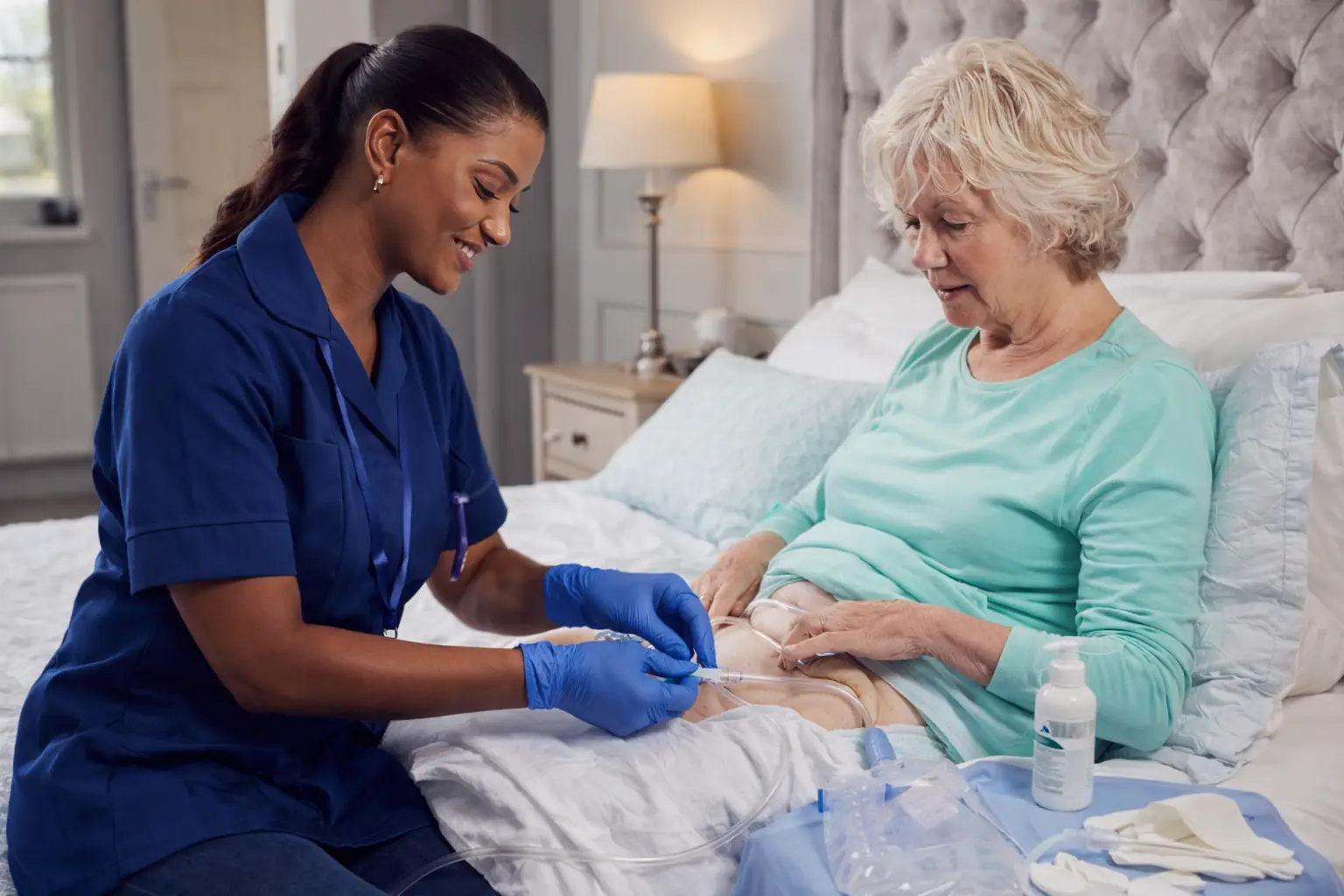
There are two main types of catheter that CareLink Direct supports. A urethral catheter is inserted through the urethra into the bladder. A suprapubic catheter is inserted directly into the bladder through a small opening in the lower abdomen, and is often used as a longer-term solution for people with ongoing urinary difficulties.
Both types require specific care, attention to hygiene, and clinical knowledge of when something is not right.
When is catheter care support at home the right choice?
Catheter care support at home is needed when someone has a urethral or suprapubic catheter in place and requires consistent support to keep it clean, functioning and free from infection.
You may be considering catheter care support if your loved one:
- Has a urethral or suprapubic catheter in place and requires regular catheter care
- Is at risk of catheter-associated infection and needs careful, consistent hygiene
- Has limited mobility or dexterity that makes self-care difficult
- Has other complex health needs and catheter care forms part of a wider package
- Has been discharged from hospital with a catheter and needs support at home

How our catheter care supports families
- Trained carers providing catheter care under nurse supervision
- Consistent attention to hygiene around the catheter site
- Monitoring for signs of infection, blockage or discomfort
- Checking catheter drainage and flagging concerns to the nurse team
- Support with catheter bag changes as required
- Documentation of all observations and any changes noted
- Escalation to the GP or community nurse if signs of infection or complication arise
- Care delivered with dignity and respect for the person’s privacy
Urethral catheter care
Urethral catheters require regular cleaning of the area where the catheter enters the body, monitoring for signs of leakage or blockage, and checking that drainage is flowing correctly. Hygiene around the catheter entry site is particularly important in preventing infection.
Our carers are trained in urethral catheter care and carry out all observations and cleaning in line with the person’s care plan and our nurse team’s guidance.
Suprapubic catheter care
Suprapubic catheters are inserted through the abdomen and require care of the stoma site, which is the skin around the insertion point, as well as monitoring for signs of infection, skin irritation or catheter movement.
Our team provides suprapubic catheter care with the same level of attention, training, and documentation as all other clinical procedures.
Arranging catheter care at home
If your loved one has a catheter and needs clinical support at home, please get in touch. Our team will talk through the current arrangements and put together a care plan that keeps your loved one comfortable, safe and as free from complication as possible.
Registered for TDDI
“Registered to provide Treatment of Disease, Disorder or Injury (TDDI)”, meaning we are approved to deliver complex clinical care at home for people living with serious illness, disability, or injury.